
A 2022 study tested whether the Autism Classification System of Functioning (ACSF) can describe social communication from toddlerhood through the teen years. Here is what it found, and what it does and doesn't tell families.






A 2022 study tested whether the Autism Classification System of Functioning (ACSF) can describe social communication from toddlerhood through the teen years. Here is what it found, and what it does and doesn't tell families.

A 2021 study asked parents of 623 Iranian children what first worried them about their child's development, then built two short screening tools from those observations. Here is what the abstract reports and what it can and cannot tell us.
A randomized trial of 48 toddlers found that two years of the Early Start Denver Model was linked to larger gains in IQ and adaptive behavior than community services. Here is what that can mean for families of newly diagnosed toddlers, and what it can't tell us.

Learn the difference between focused and comprehensive ABA, what affects recommended hours, and how a BCBA builds your child’s plan.

How ABA therapy coverage works in Maryland, including state requirements, Medicaid, prior authorization, costs, and questions to ask your insurer.
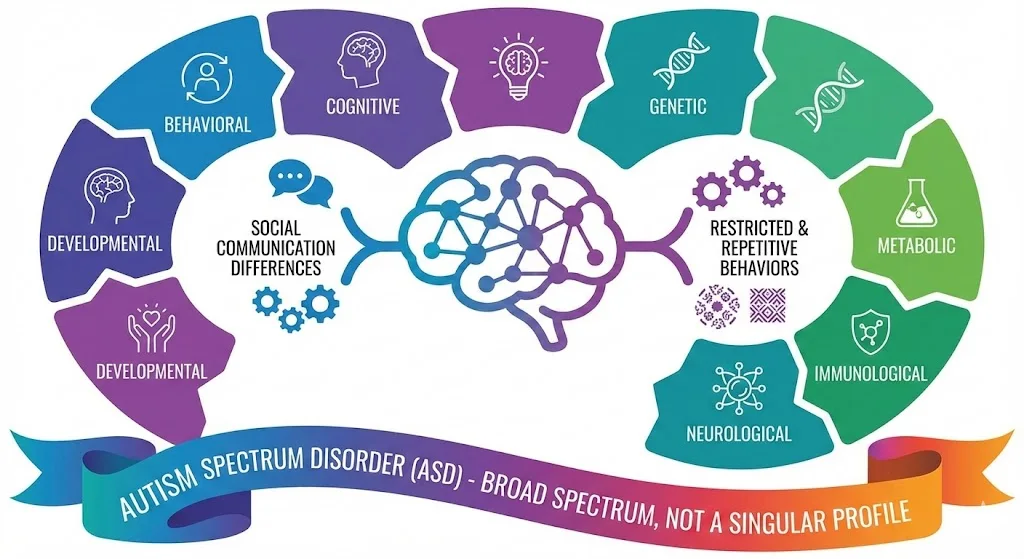
Overview Autism spectrum disorder (ASD) is a multifaceted neurodevelopmental condition that typically presents in early childhood and continues throughout life. Core characteristics include differences in social communication and the presence of restricted or repetitive behaviors. Modern research underscores the significant variability seen across behavioral, cognitive, genetic, metabolic, immunological, neurological, and developmental domains, emphasizing that ASD...

Introduction Parent training is one of the most powerful and evidence-supported components of autism intervention. For decades, research has shown that when parents are equipped with structured, scientifically grounded strategies, children with Autism Spectrum Disorder (ASD) display meaningful improvements in communication, behavior, social engagement, and daily living skills. This article summarizes key scientific findings presented...

Introduction Applied Behavior Analysis (ABA) remains the most extensively researched and widely endorsed intervention framework for children diagnosed with Autism Spectrum Disorder (ASD). Over several decades, empirical evidence—including randomized controlled trials, longitudinal studies, and meta‑analyses—has demonstrated that ABA-based programs can meaningfully improve key developmental domains. A comprehensive 2018 meta-analysis by Makrygianni and colleagues synthesized data...

Applied Behavior Analysis (ABA) and Its Application in the Treatment of Autism in Young Children Introduction Applied Behavior Analysis (ABA) has been one of the most influential and widely used approaches in the treatment of Autism Spectrum Disorder (ASD) for more than four decades. Its foundation in behavioral science, emphasis on observable progress, and systematic...



Mon – Fri: 9am-6pm
Sat: 9am-6pm
Sun: Closed