



Early Intervention services are designed to support young children who may benefit from additional developmental support during the early years of life.
Using principles of Applied Behavior Analysis (ABA), our program focuses on teaching foundational skills that support learning, communication, and social engagement. Services are individualized and developmentally appropriate, with goals selected based on each child’s strengths and needs.
Early support can play an important role in helping children build skills that prepare them for future learning environments.

Comprehensive Developmental Assessment
A comprehensive evaluation to understand your child’s early strengths, needs, and learning priorities.
Individualized Early Intervention Plan
Personalized goals and strategies designed to support communication, social skills, and early learning.
Play-Based & Structured Learning
Engaging, developmentally appropriate sessions that promote learning through play and routine.
Ongoing Progress Monitoring
Regular data review and program adjustments to ensure meaningful and steady progress.
Our Early Intervention program is designed to support young children during critical developmental years through structured, individualized, and play-based learning.
Each child begins with a comprehensive assessment conducted by a qualified clinician to understand developmental strengths, areas of need, and early learning priorities. Based on this assessment, an individualized intervention plan is created to support skill development across communication, social engagement, early learning, and daily routines.
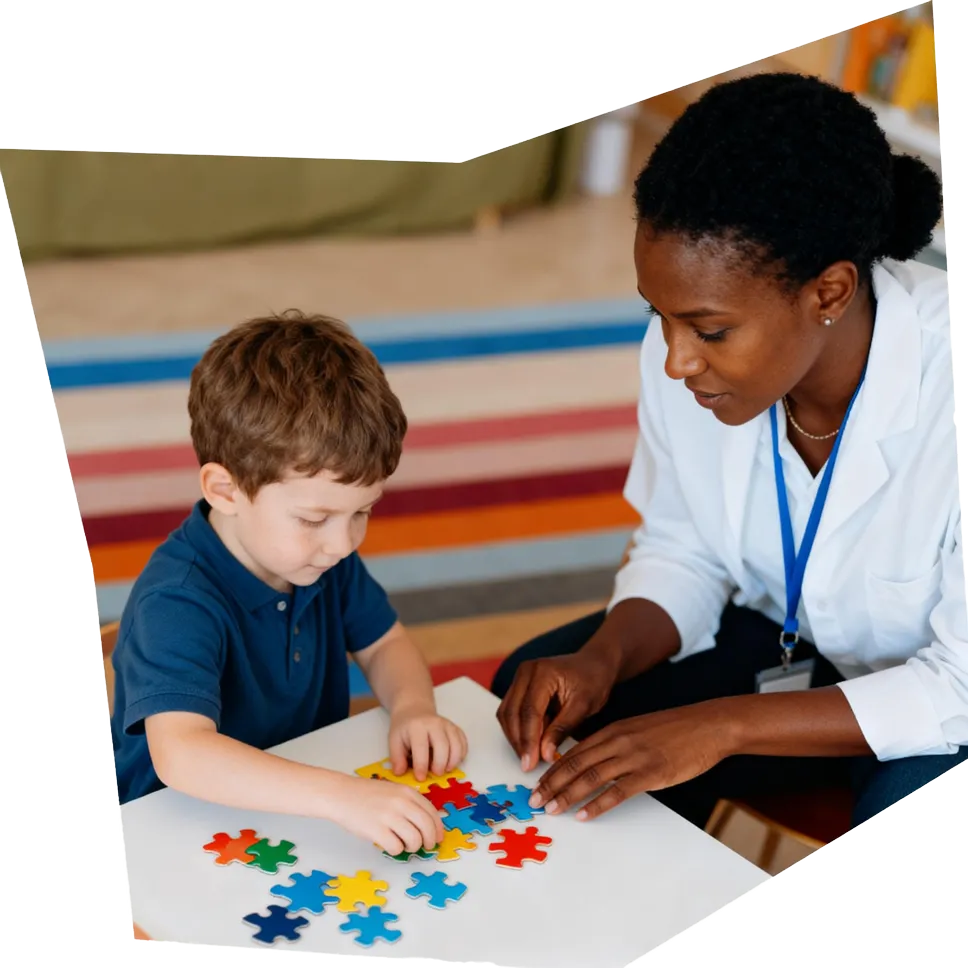
Therapy is delivered in a supportive, nurturing environment that encourages curiosity, participation, and confidence. Instruction is developmentally appropriate, engaging, and carefully structured to support progress while respecting each child’s pace of learning.
Progress is monitored regularly, and programs are adjusted as skills emerge and new goals are introduced—ensuring therapy remains effective, responsive, and meaningful for both children and families.

We believe early intervention is most effective when families are actively involved. Parents and caregivers are essential partners in the therapeutic process, and we work closely with families to support consistency across home and everyday environments.
Throughout the program, families receive ongoing communication, guidance, and support to better understand their child’s progress and development. Our team is always available to answer questions, provide recommendations, and collaborate on next steps.
If you have concerns about your child’s development or would like to learn more about early intervention services, we’re here to help you explore the best path forward.
Supporting early communication skills such as requesting needs, understanding simple language, and beginning expressive communication to help children interact more effectively with others.
Supporting children in navigating everyday routines and transitions by building predictability, flexibility, and participation in age-appropriate activities.
Encouraging shared attention, interactive play, and positive engagement with peers and adults to build early social connections.
Teaching early coping and regulation skills to help children manage emotions, tolerate changes, and respond more adaptively to everyday situations.
Helping children develop foundational skills such as focusing on activities, imitating actions or sounds, and participating in structured learning experiences.



Mon – Fri: 9am-6pm
Sat–Sun: Closed